

Albert Liu, founder and CEO of AEMHY, attended the Fifth International Conference on Sustainable Energy Development in Beijing on November 21–22, 2026. On November 22, he spoke at the forum on advanced materials and technologies for renewable hydrogen production. His presentation, Diverging Paths in AEM Water Electrolysis: Trade-offs in Materials and Manufacturing, explored design decisions facing developers of anion exchange membrane (AEM) electrolyzers.
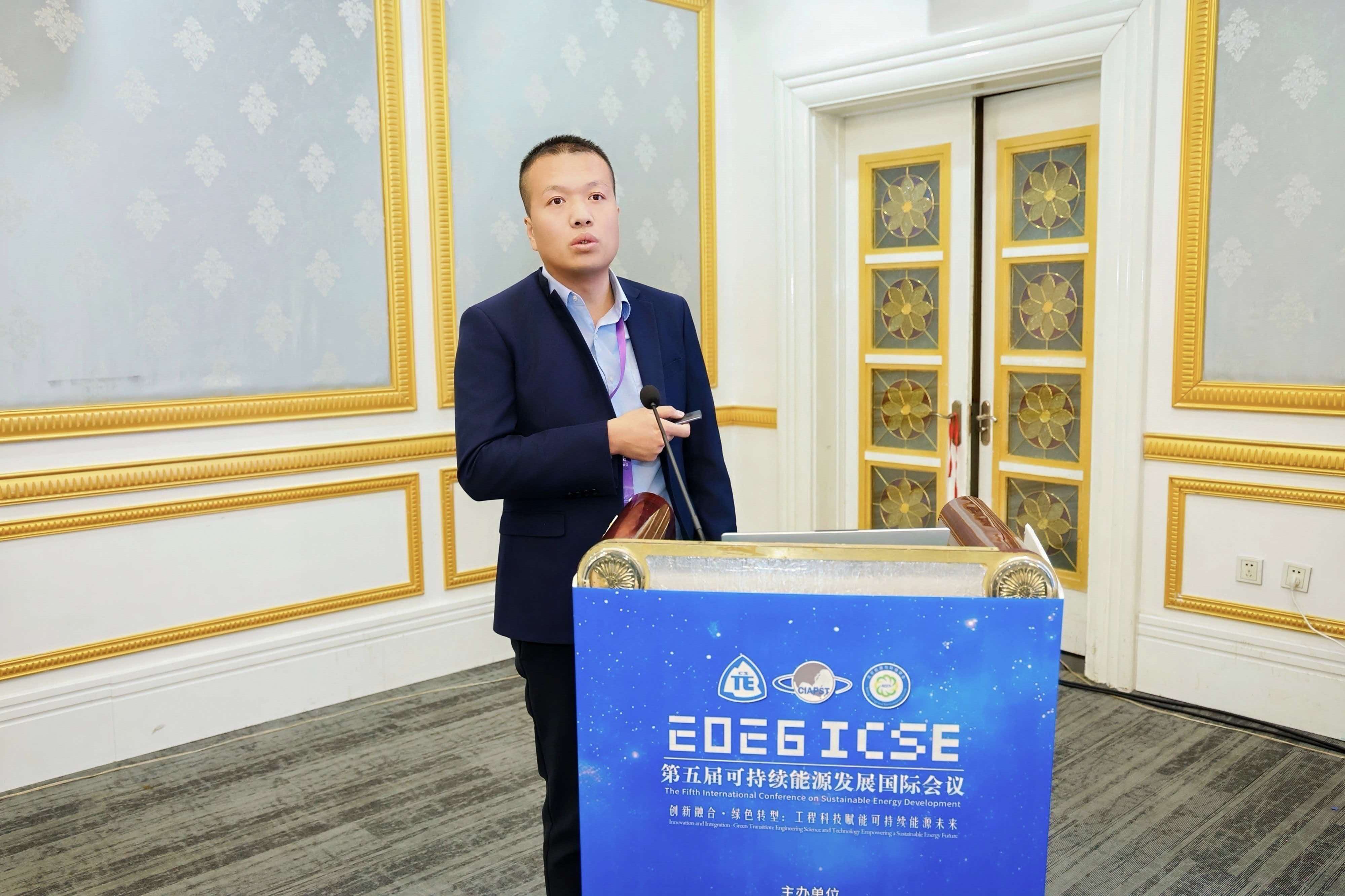
Liu discussed choices ranging from homogeneous and reinforced membranes to cell designs with and without flow channels. He also outlined a practical approach to early deployment: put systems to work in applications with a clearly defined need for hydrogen, then use operating experience to refine materials, stack design and manufacturing processes.
Researchers and entrepreneurs from across China shared progress in catalysts, membranes, electrolyzer stacks and complete hydrogen production systems. One particularly candid discussion drew on a fellow developer’s experience with a megawatt-scale AEM demonstration. The team raised three engineering questions: How should operators assess shutdown risks from shunt currents when several stacks are integrated? How can seals remain reliable as hydrogen output per stack increases? And how accurately can simulations predict cell-to-cell variation in a large stack? These questions give researchers and system developers specific problems to investigate together.
A presentation on white and orange hydrogen by PetroChina’s Research Institute of Petroleum Exploration and Development offered Liu a broader perspective. He pointed to China’s FCV market, where rapid advances in lithium-ion batteries changed the competitive landscape for hydrogen fuel cells. For AEMHY, developments in geological hydrogen are another reason to look beyond electrolysis when assessing where AEM systems can best meet future demand.